
Healthcare is not just a social service—it is an economic driver.
In Liberia, the connection between low healthcare spending and persistent poverty is undeniable.
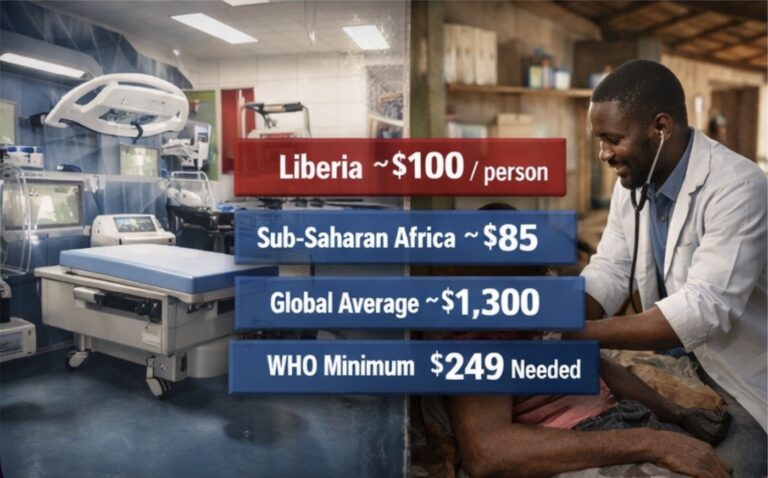
The Data Tells the Story
Meanwhile:
- Nearly half of Liberia’s population lives in poverty
- Up to 72% of rural residents are classified as poor
Why Healthcare Spending Matters for Poverty
Countries that invest more in healthcare tend to experience:
- Lower child and maternal mortality
- Higher productivity
- Longer life expectancy
- Stronger economic growth
Globally, increased healthcare spending has been directly linked to:
- Improved life expectancy
- Reduced mortality rates
The Poverty Trap
In Liberia, low healthcare investment creates a vicious cycle:
- People get sick from preventable diseases
- Families pay out-of-pocket for treatment
- Savings are depleted
- Productivity declines
- Poverty deepens
Even when healthcare is available, many families cannot afford it—leading to delayed or no treatment.
A System That Burdens the Individual
In low-income countries, a large share of healthcare costs is paid directly by households.
This means:
- Illness = financial crisis
- Healthcare = luxury for many
Breaking the Cycle
To reduce poverty, healthcare must be:
- Accessible
- Affordable
- Community-centered
This is where HelpLBR steps in.
Why HelpLBR Matters
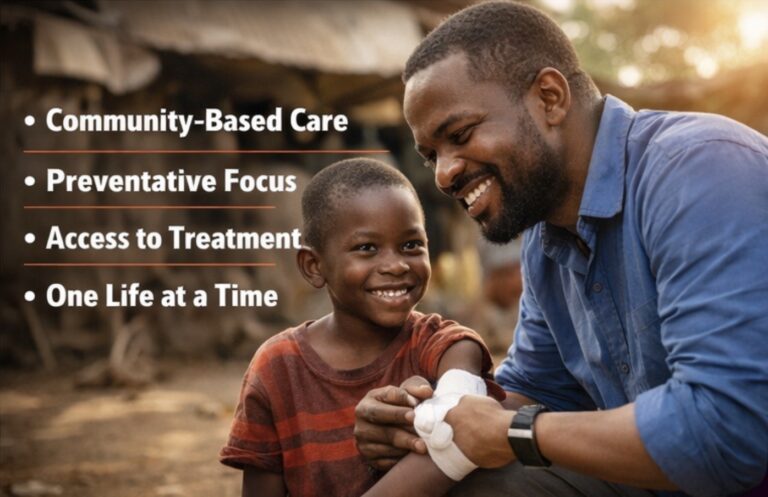
We focus on:
- Preventative care
- Community-based solutions
- Direct support to individuals and families
Because when you improve health, you:
- Increase earning potential
- Strengthen families
- Build stronger communities
Healthcare is not just about survival—it is about economic empowerment.